
Scrub Daddy Net Worth & Brand Story: How a Smiley Sponge Became a $600M Business
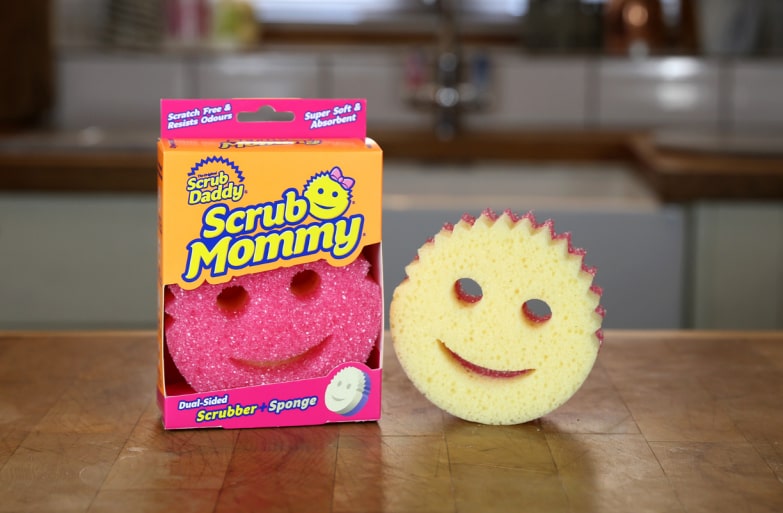
A smiling sponge turned into a $600M brand—and no, that’s not a joke. Scrub Daddy wasn’t born in a startup incubator or pitched with a glossy deck. It started as a quirky cleaning tool and grew into one of the biggest Shark Tank success stories of all time. Today, it’s not just a household product—it’s a masterclass in branding, timing, and consumer psychology.
Estimated Net Worth & Growth Snapshot
Scrub Daddy has generated over $1 billion in lifetime retail sales and is currently valued between $500M and $600M. Its founder, Aaron Krause, is estimated to have a net worth of $70M–$100M, depending on equity distribution and reinvestment.
A breakdown of what contributes to the brand’s valuation:
-
Lifetime revenue: Over $1 billion
-
Annual sales: Estimated $100M+
-
Shark Tank stake: Lori Greiner invested $200K for 20%
-
Retail partners: Walmart, Bed Bath & Beyond, Target, Amazon, Costco, QVC
-
Global reach: 20+ countries
-
Top-selling SKU: The original yellow scrubber with the smiley face
While those numbers are impressive, what makes Scrub Daddy worth studying isn’t just its sales—it’s how a simple product became a cultural and commercial hit.
The Origin Story: Accidental Genius Meets Persistence
Scrub Daddy’s founder, Aaron Krause, isn’t a TV-made entrepreneur. Before Shark Tank, he was a car detailing business owner who invented foam pads to avoid scratching vehicle surfaces. When 3M acquired part of his company, they weren’t interested in the leftover scrubber prototypes—so he literally stored them in his garage.
Years later, while cleaning patio furniture, he pulled one out and realized it changed texture with water temperature—firm in cold water, soft in warm. That became the product’s signature feature.
But here’s the twist:
Scrub Daddy wasn’t a breakout hit right away. Krause pitched it to retailers and got rejected repeatedly. It finally gained traction through QVC demos, where the smiling face became a subtle marketing advantage—it made the sponge “friendly,” easy to remember, and shareable.
That set the stage for the Shark Tank moment.
Shark Tank: The Smile That Sold Millions
-
Retail demo potential (hello, QVC)
-
A visual identity you can’t forget
-
$100,000 in sales in 48 hours
-
$18 million in sales within a year
-
Retail deals across big-box stores
-
Recurring QVC features
-
Word-of-mouth virality before TikTok existed
Why Scrub Daddy Won: It Was Never “Just a Sponge”
1. It created a memorable product personality
2. It mixed science with simplicity
3. It dodged the “boring household item” trap
4. It branded before scaling
Sales Channels That Supercharged Its Growth
Scrub Daddy didn’t rely on a single platform. Instead, it stacked channels smartly:
QVC – The demo-friendly launchpad Target & Walmart – The credibility builders Amazon – Where the product went viral again Costco – Bulk sales & household adoption International markets – UK, Canada, Australia, Germany
This multi-platform play helped the company scale without relying solely on ad spend.
Competitors vs. Scrub Daddy: Why It Still Stands Out
| Brand | Strengths |
Weakness vs. Scrub Daddy |
| Scotch-Brite | Legacy, market coverage | Lacks personality & premium feel |
| OXO | Design innovation | Higher price, less fun factor |
| Mr. Clean | Brand power, distribution | Generic aesthetics |
| Generic sponges | Cheap | No memorability or loyalty |
Scrub Daddy competes in a low-margin category while charging a premium—and customers happily pay it.
From One Sponge to a Full Product Line
-
Scrub Mommy (dual-sided)
-
Dye-free “Safe for Baby” versions
-
Eraser pads
-
Sink organizers
-
Sponge caddies
-
Cleaning creams
-
Soap dispensers
Startup Lessons from Scrub Daddy
Scrub Daddy isn’t just a viral product—it’s a playbook founders can steal from. Here are takeaways that fit perfectly into the NineLabs mindset:
1. Boring industry ≠ boring opportunity
Household goods weren’t “sexy,” but they were universal.
2. Product identity matters more than product category
A smile was worth millions in ad dollars.
3. Demo power > digital ads
Some products need to be shown, not scrolled.
4. Personality builds retention
Customers don’t casually share a sponge—unless it smiles back.
5. Branding doesn’t need a manifesto
It can be as small as a face and a story.
6. Shark Tank wasn’t the reason—it was the accelerator
The groundwork came first.
FAQ
- What is Scrub Daddy’s net worth in 2024?
Scrub Daddy is valued between $500M and $600M, based on product sales, brand equity, and retail penetration. - How much is Aaron Krause worth?
The founder’s estimated net worth is between $70M and $100M, depending on equity and royalties. - How much did Lori Greiner make from Scrub Daddy?
She invested $200K for 20%. Her stake is now likely worth over $100M. - Is Scrub Daddy the most successful Shark Tank product?
Yes—it’s the highest-grossing consumer product to come from the show. - How many Scrub Daddy products have been sold?
Over 25 million units in hundreds of retail chains, plus Amazon and QVC. - Why did Scrub Daddy go viral?
A mix of clever product design, emotional branding, founder persistence, and demo-friendly marketing.
Featured Image Source: Google